
Build a Self-Managing Team | Landlord Profitability Play # 7
Real estate investing becomes profitable the moment it stops depending entirely on you. Until then, it’s not passive income. It’s another job.
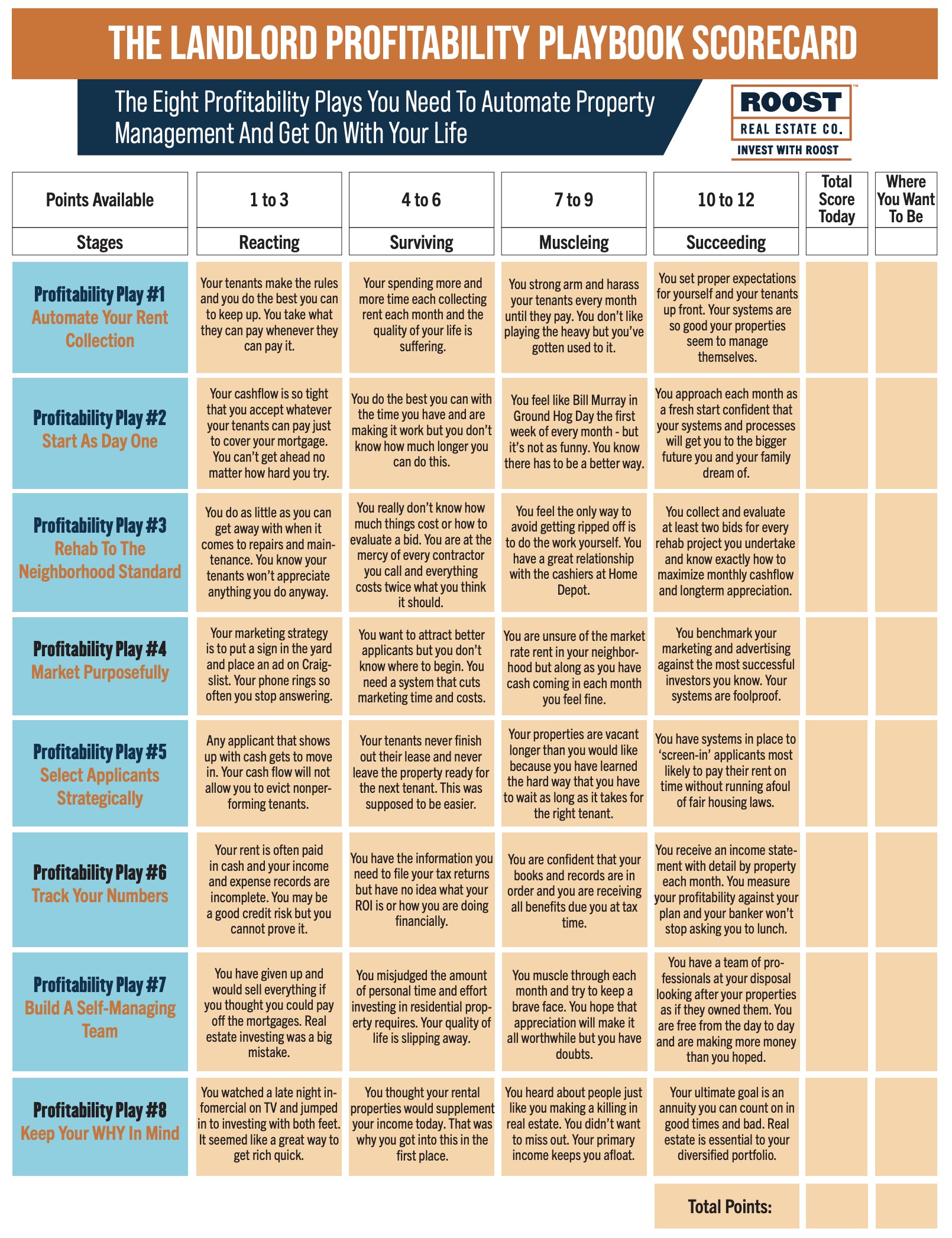
Profitability Play #7 in the Landlord Profitability Playbook Scorecard is about building a self-managing team — the people, systems, and support structure that allow your portfolio to operate efficiently without constant hands-on involvement.
This is the play that determines whether your rentals create freedom — or consume it.
So click here to grab the free scorecard, and follow along. This isn’t just another assessment tool – it’s your roadmap from wherever you are today to where you want to be 12 months from now.
Why This Play Matters
Most landlords start by doing everything themselves. They answer tenant calls. Coordinate maintenance. Collect rent. Track expenses. Manage contractors.
At first, it feels like control. Eventually, it becomes constraint. The more your portfolio grows, the more your time disappears.
Without a team, your income cannot scale — because your time cannot scale. Building a self-managing team allows you to:
- Increase income without increasing workload
- Reduce costly mistakes and emergency repairs
- Improve tenant retention and property performance
- Regain your time, flexibility, and peace of mind
This play is the transition point between owning rentals and owning a real estate business.
So, how self-managing is your portfolio? Use this scorecard to assess your current position.
Stage 1: Reacting (1–3 Points)
This is where most landlords begin — and where many remain longer than they expected. You’re handling everything yourself because hiring help feels expensive or risky.
That means:
- Answering tenant calls at all hours
- Managing every maintenance issue personally
- Collecting rent and tracking finances manually
- Constant interruptions to your personal life
What was supposed to create freedom now creates stress. Your income depends entirely on your availability. This stage is not scalable — and not sustainable.
Stage 2: Surviving (4–6 Points)
At this stage, you understand the need for help — but haven’t fully built the support system yet. You’re still managing most daily operations, while attempting to introduce some structure.
You may feel:
- Overwhelmed by maintenance coordination
- Interrupted during evenings and weekends
- Unsure who to hire or trust
- Stretched thin between your rentals and your life
Your portfolio is growing — but your workload is growing with it. This stage often feels like constant tension between progress and burnout.
Stage 3: Muscling (7–9 Points)
You’ve implemented systems and brought in some support, but you’re still heavily involved. You may have:
- Contractors you rely on
- Accounting support
- Basic management tools
But you’re still coordinating much of the operation. You’re pushing forward, believing appreciation and long-term growth will justify the effort. Yet the day-to-day workload remains significant.
This stage is productive — but inefficient. Your portfolio works. But it still depends on you.
Stage 4: Succeeding (10–12 Points)
This is where real estate investing finally delivers the freedom it promised. You’ve built a self-managing team that handles the majority of daily operations.
This team typically includes:
- Professional property management
- Reliable maintenance vendors
- Accounting and financial tracking support
- Clear operational systems
Your team handles rent collection, repairs, tenant communication, and financial reporting. You are no longer the bottleneck.
The results are powerful:
- Increased efficiency
- Reduced operational stress
- Improved financial performance
- Greater scalability
- More time and freedom
Your portfolio operates like a business — not a job. This is where passive income becomes real.
Why Professional Teams Improve Profitability
Many landlords hesitate to build a team because they focus only on the cost. But the real comparison is not cost — it’s performance.
Professional management often improves profitability by:
- Increasing rent through proper pricing and marketing
- Reducing vacancy time
- Preventing costly maintenance issues
- Improving tenant quality and retention
- Reducing costly operational mistakes
Most importantly, it removes the hidden cost of your time. Your time becomes available for higher-value activities — including growing your portfolio.
The Real Goal: Freedom Through Structure
The goal of real estate investing is not to do everything yourself. The goal is to build systems and teams that allow your portfolio to operate successfully without constant intervention. This creates:
- Financial freedom
- Operational stability
- Scalability
- Peace of mind
Investors who build strong teams build stronger portfolios.
Your Next Step: Score Yourself Honestly
Ask yourself:
- Are you still handling everything personally?
- Are you overwhelmed by daily operational demands?
- Or have you built a team that allows your portfolio to operate independently?
Your answer reveals whether your rentals are creating freedom — or consuming it.
Building a self-managing team is one of the most important steps in becoming a truly profitable real estate investor.
About the Landlord Profitability Playbook Video Series
In this video series, we’re going to walk through the eight profitability plays that separate successful real estate investors from those who are just surviving – or worse, failing.
👉 Click here to download the Landlord Profitability Playbook Scorecard and follow along.
Invest with Confidence—Invest with ROOST
At ROOST Real Estate Co., we know that profitability is the ultimate goal. That’s why we work so hard to ensure your properties are maintained to the neighborhood standard, marketed well, and rented to the right tenants.
PLUS… Whenever you’re ready, here are three ways we can help you automate your rent collection and get on with your life:
- Learn practical ways to free up your time and increase your profits. Listen to The Landlord Profitability Playbook Podcast at www.LandlordProfitabilityPlaybookPodcast.com
- Get a FREE Market Rate Rent Analysis for your properties. Sometimes a second opinion can make a big difference in your business. www.MarketRateRent.com
- Get a Personalized Property Management Quote and free property management consultation with Gretchen Mitchell at www.PMServicesQuote.com.

Chris McAllister
Chris McAllister was first licensed as a real estate broker in Ohio in 2003 and in Florida in 2015. He founded ROOST Real Estate Co. in early 2014.
Chris’s passion is creating and coaching business opportunities and strategies that support and add value to real estate professionals and their clients. He is the author of several books on the profession, including Protecting the Goose that Lays the Golden Eggs and Eight Success Habits of the New Real Estate Professional.
As both a real estate investor and landlord advocate, Chris also wrote What to Expect from Your Property Manager (Even if Your Property Manager is You) and The Landlord Profitability Playbook — a system for automating property management and reclaiming your time.
Chris is also the host of several podcasts, including Connect, Practice, Track, and Grow for real estate professionals, The Landlord Profitability Playbook Podcast for residential real estate investors, and The All Things Real Estate Podcast for home buyers and sellers.
Follow Chris on LinkedIn, YouTube, and Facebook for new episodes, insights, and landlord profitability strategies.